POCO C95 Pro 4G: What's New, and Is It Worth Buying?
POCO C95 Pro 4G now has official product pages from Xiaomi, replacing the leaked renders that did the rounds on 7 September. The headline change is battery capacity: 7,500mAh against the POCO C85 4G's 6,000mAh, a 25% jump, with faster 45W charging to match.
That's a real number. But realme C100 4G, Samsung Galaxy A18 4G and Motorola Moto G17 Power all compete in the same budget 4G tier, each with its own trade-off, and none of the five phones here, including the C95 Pro itself, is available refurbished anywhere yet, not even on refurbed. Here's what POCO changed, how the three rivals compare, and whether a refurbished phone from a brand already in that lineup gets you more for less.
Quick Verdict: Where the POCO C95 Pro 4G Wins, and Where It Doesn't
The POCO C95 Pro's real win: 7,500mAh and 45W charging, a real jump over the C85's 6,000mAh and 33W.
realme C100's edge: a nominally bigger 8,000mAh battery, though that doesn't prove longer runtime on its own.
Galaxy A18's edge: a sharper AMOLED screen and the only confirmed software-update commitment of the five.
Moto G17 Power's edge: the only ultrawide camera here, on a sharper LCD panel.
What's still missing: none of the five publishes a comparable repairability or carbon-footprint figure, so none of this is an environmental ranking.
The catch: none of these five phones can be bought refurbished today. A refurbished phone from Samsung, Motorola or POCO's own lineup already can.
POCO C95 Pro vs POCO C85 4G: What a Year Changed
The POCO C95 Pro's battery grows from the C85's 6,000mAh to 7,500mAh, a 25% increase, and charging power rises from 33W to 45W, about 36% more. Reverse charging more than doubles too, from 10W to 22.5W. None of that is a small-print footnote: it's the one upgrade here that changes how the phone behaves day to day.
Weight and thickness move the other way: 205g and 7.99mm on the C85 become 232g and 8.8mm on the C95 Pro. More cell, more mass, no way around it. The memory-card ceiling doubles from 1TB to 2TB, and the software moves from HyperOS 2 to HyperOS 3.
The chipset name changes too, from Helio G81-Ultra to Helio G91-Ultra, but the published cores don't: both list the same Cortex-A75 and Cortex-A55 CPU cores at a 2.0GHz maximum and the same Mali-G52 MC2 graphics. A new chipset name isn't proof of a faster phone on its own; matched benchmarks are what would show that, and a version bump from HyperOS 2 to 3 doesn't by itself promise a longer run of updates either.
realme C100, Galaxy A18 or Moto G17 Power: Which Rival Matters More?
realme C100 4G carries the biggest battery of the group at 8,000mAh, about 6.7% more than the C95 Pro's 7,500mAh, on a Helio G92 Max chipset with the same 45W charging. A bigger number doesn't settle the runtime question by itself: display power draw, chipset efficiency, radio conditions and software all factor into how long a battery lasts in practice, and none of the cited sources measured these five phones side by side.
Samsung Galaxy A18 4G trades battery size for screen quality: a 6.7-inch Super AMOLED panel at 1080x2340 and 90Hz, against LCD panels on the other two, paired with a smaller 5,000mAh cell at 25W charging and an Exynos 1610 chipset, which the brand's own French announcement notes may vary by market. It's also the only one of the five with a stated software-update commitment, covered in more detail further down.
Motorola Moto G17 Power goes a different direction again: a 6.72-inch LCD at a sharper 2400x1080 than the C95 Pro's own panel, though at a slower 60Hz refresh rate, a 6,000mAh battery at 30W charging, a Helio G81 Extreme chipset, and the only ultrawide camera lens in this whole comparison.
Three different bets, in other words: more raw capacity, a better screen with a support promise, or a sharper panel with a more flexible camera. None of this is a performance or runtime ranking, just what each brand chose to prioritise.
Cameras Across All Five: Megapixels Aren't the Whole Story
Megapixel counts are the easiest number to compare and the least reliable one to judge a camera by. The POCO C95 Pro pairs a 50MP main sensor with an auxiliary lens and an 8MP selfie camera. realme C100 matches the 50MP main and 8MP selfie count exactly, specification for specification.
Samsung Galaxy A18 spreads its count across three rear lenses (50MP, 5MP and 2MP) and steps up to a 13MP selfie camera, but its main sensor explicitly skips optical image stabilisation, worth knowing if you shoot a lot of handheld low-light shots.
Motorola Moto G17 Power is the outlier: a 50MP Sony LYTIA 600 main sensor plus a 5MP ultrawide, the only ultrawide lens anywhere in this group, and a 32MP selfie camera, the highest resolution of the five. None of these numbers is a substitute for a side-by-side photo test, and none of the cited sources ran one across all five phones.
The Weight of a Bigger Battery: Portability and Reverse Charging
A bigger battery has to go somewhere, and on most of these phones it shows up on the weight line. The POCO C95 Pro's extra 1,500mAh over the C85 comes with an extra 27g, landing at 232g. realme C100 complicates that pattern: at 219g it's lighter than the C95 Pro despite an even bigger 8,000mAh cell. Samsung Galaxy A18 is the lightest of the four with a disclosed weight, 196g, which also lines up with the smallest battery here. Motorola doesn't disclose a weight for the Moto G17 Power in the cited pages.
The C95 Pro also gets a named cover glass for the first time in this line, Gorilla Glass 7i, and its reverse-charging rate more than doubles from the C85's 10W to 22.5W. That's a real use for the extra capacity if you need to top up another phone, earbuds or a smartwatch, though lending power out does draw down your own battery: capacity spent on someone else's device isn't capacity left for your own day.
Battery Health, Software Support and Repairability: The Fine Print
Battery longevity is the one area with a durability number from most of these brands. POCO's own internal lab testing claims at least 80% capacity after 1,000 full cycles for both the C95 Pro and the C85. realme projects at least 80% battery health after seven years, its own lab projection rather than an independent test. The cited Samsung Galaxy A18 UK listing states a 1,200 minimum-cycle rating. Motorola publishes no comparable claim for the G17 Power in the cited pages.
Software support is more one-sided. That same Galaxy A18 listing is the only one of the five with a stated commitment: up to six OS upgrades and six years of security updates, running through 31 October 2032. POCO, realme and Motorola each have no model-specific commitment in the pages checked, which doesn't prove none exists, only that it isn't stated where it would need to be.
Materials disclosure follows the same split. Samsung's cited SKU states 1.13% recycled content and 11.8% recyclability, with its methodology unconfirmed. Motorola states 11.78% recycled content for the Power model and 72.71% recyclability on a shared family page that needs exact-model confirmation, plus an uncommon standard identifier (EN 455557:2020) worth verifying before any standards comparison. The C95 Pro, C85 and realme C100 have no comparable figure.
None of this adds up to a verified repairability ranking. The EU's Joint Research Centre frames repairability around battery and screen replacement cost, parts availability, disassembly and documentation, and by that measure none of these five phones has a confirmed, comparable class yet. A battery-health projection is a lab claim about capacity, not a promise of years of use, and one phone's update commitment doesn't carry over to a different model from the same brand.
The E-Waste Reality Behind a Bigger Battery
The world generated 62 million tonnes of e-waste in 2022, and only 22.3% of it was documented as formally collected and recycled, according to the 2024 ITU/UNITAR Global E-waste Monitor. That figure covers every kind of electronics, not phones specifically, and it isn't a 2026 total, but it's the backdrop every new phone launch adds to.
Here's what one POCO C95 Pro costs to keep charged, worked out from the numbers it publishes rather than measured directly: its 7,500mAh battery at a nominal 3.85V holds about 28.9Wh, charging losses at 85% wall-to-battery efficiency push the real cost of one full charge to about 34.0Wh, and charging it once a day for a year adds up to roughly 12.4kWh drawn from the socket.
What that means in CO2e depends entirely on where the electricity comes from, which is why this is three scenarios rather than one answer: at a clean 0.05kg CO2e per kWh, that's about 0.6kg of CO2e a year; at a middling 0.40kg per kWh, about 5.0kg a year; at a carbon-heavy 0.80kg per kWh, about 9.9kg a year. These are calculations from stated assumptions, not a measured result for any specific country's grid, and they leave out manufacturing, transport, networks, cloud services, repair and end of life entirely.
One more trade-off worth knowing: over the same length of use, a 7,500mAh battery goes through roughly 20% fewer full charge cycles than a 6,000mAh one would, since 6,000 divided by 7,500 works out to 0.8. That doesn't guarantee 20% more years of service, since heat, calendar ageing, repairs and software support all still have a say, but it's one more reason a bigger battery isn't automatically a worse environmental bet.
Who Should Want Which of These Five Phones?
Maximum battery capacity on paper points to the realme C100, though matched runtime testing is what would show that in practice, alongside a confirmed delivered price and network compatibility checked for your own operator before buying.
The POCO generation question comes down to trade-offs, not features: does the C95 Pro's extra 1,500mAh and faster charging justify its added weight and whatever price premium it carries over the C85? A simple battery-only comparison says the C95 Pro only wins on capacity per euro if that premium stays under 25%, before anything else about the two phones is weighed in.
A sharper screen and the only confirmed update commitment here point to the Galaxy A18, but which exact regional SKU you'd be buying, and its repair terms, still need confirming. A sharper LCD panel and the only ultrawide camera point to the Moto G17 Power, provided its image quality holds up in a real test and a software-update commitment turns up somewhere Motorola states it clearly.
And for some people, the right answer is none of the above: checking whether a current POCO C85 still has security support ahead of it, a battery worth keeping, and a repair cost that beats replacing it outright, before buying anything new at all.
One more way to frame any of this: total cost of ownership is purchase price plus accessories plus likely repairs, minus whatever the phone is worth when you're done with it, divided by how many years you get out of it. None of the above is a declared overall winner, just a shortlist of which trade-off fits which reader. One thing all five share, though: none of them can be bought refurbished yet. Here's what already can be, from three of the same brands.
The Refurbished Alternative: Why an Already-Available Phone Might Beat All Five
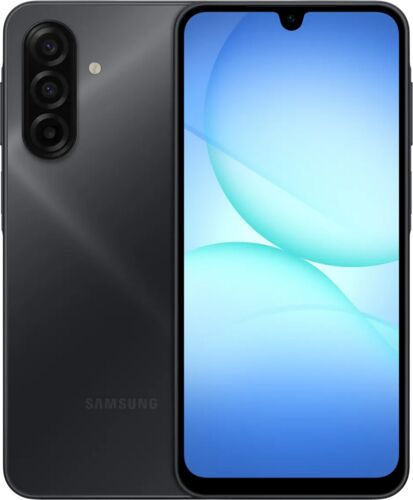
Display
6.7 in AMOLED, 90 Hz
Chipset
Mediatek Helio G99, 2x2.2 GHz + 6x2.0 GHz
Camera
50 MP main, 5 MP ultrawide, 2 MP macro
Battery
5000 mAh
Connectivity
WiFi ac, Bluetooth 5.3, NFC
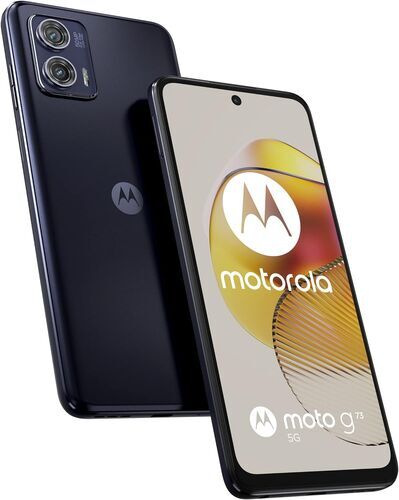
6.5 in IPS, 120 Hz
Mediatek Dimensity 930, 2x2.2 GHz + 6x2.0 GHz
50 MP main, 8 MP wide
5000 mAh
WiFi ac, Bluetooth 5.3, NFC, 5G
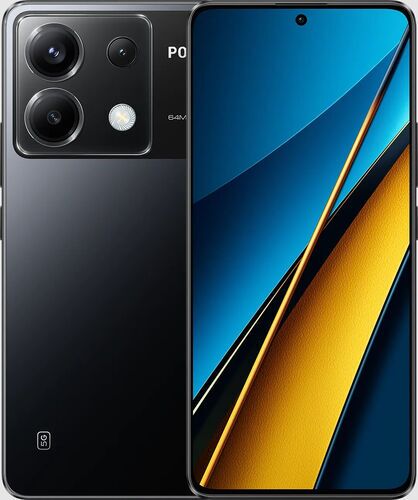
vs.
6.67 in AMOLED, 120 Hz, HDR10+
Qualcomm Snapdragon 7s Gen 2
64 MP main, 8 MP ultrawide, 2 MP macro
5100 mAh
WiFi ac, Bluetooth 5.2, NFC, 5G
So, Which One Should You Buy?
These three are refurbished, which means professionally tested, cleaned and backed by a warranty, rather than sold as-is, and on paper each one already beats at least one of the five new phones above while likely costing less.
If one of those five phones' specific strengths matters to you, that's still a legitimate reason to buy new: realme C100's raw battery number, the Galaxy A18's screen and update promise, the Moto G17 Power's camera versatility, or the C95 Pro's own charging speed and reverse-charging party trick. Chasing this exact generation is a real choice, not a mistake.
But if what you want is a reliable, affordable phone without chasing this year's exact silicon, the Galaxy A17, Moto G73 or Poco X6 above are worth checking before any of the five new options. Every one of them comes with refurbed's test report, a clear condition grade, a minimum 12-month warranty and a 30-day trial, so there's room to change your mind.
POCO C95 Pro 4G: Frequently Asked Questions
Is the POCO C95 Pro's battery upgrade a big deal?
Yes. Battery capacity rises 25%, from 6,000mAh to 7,500mAh, and charging power rises about 36%, from 33W to 45W. Weight and thickness go up too, so it's a real trade, not a free upgrade.
Does the POCO C95 Pro have a bigger battery than the realme C100?
No. The realme C100 carries 8,000mAh against the C95 Pro's 7,500mAh, about 6.7% more. A bigger number doesn't prove longer runtime on its own, since display power, chipset efficiency and software all affect it too.
Does the Samsung Galaxy A18 have the better screen?
By panel type and resolution, yes. It's a 6.7-inch Super AMOLED at 1080x2340, against LCD panels on the other phones here. It's also the only one of the five with a stated software-update commitment.
Can you buy any of these five phones refurbished yet?
No. POCO C95 Pro, POCO C85, realme C100, Galaxy A18 and Moto G17 Power are all too new to have reached refurbed's catalog, or any other refurbished listing checked here. A refurbished Samsung Galaxy A17, Motorola Moto G73 or Poco X6 is available today instead.
Is it worth repairing or keeping a POCO C85 instead of buying the C95 Pro?
It can be. Check the C85's remaining security support, how its battery is holding up, and what repairs would cost before replacing it, since the C95 Pro's main gain is battery capacity, not a different experience.
Browse Refurbished Smartphones on refurbed
None of today's five new budget 4G phones can be bought refurbished yet, but plenty of reliable alternatives from the same brands already can. Every phone on refurbed ships with a test report, a clear condition grade, a minimum 12-month warranty and a 30-day trial.

Sign up for our newsletter for the first time and save 65 zł!
Never miss an offer again.
Information about the use of personal data can be found in our Privacy policy.
Get the refurbed app
For iOS and Android


Confirm sign-up
Almost done: We’ve sent you a confirmation email
- © Refurbed Marketplace GmbH
- Accessibility
- T&C
- Privacy Policy
- Imprint
- Legal Notices
- European Data Act
- Cookie Policy